Stock futures rose, and Treasury bill yields maturing on 8 June fell amid signs that the US is closing in on an agreement to raise the debt limit and avoid a government default. A deal could be struck today, paving the way for Congress to vote on Tuesday. Negotiators are reportedly $70bn away from a deal, with both sides being able to claim victories. There would be a cap on domestic spending over two years, with some work requirements for social safety net programmes and an overhaul of how domestic energy and power projects are approved. Meanwhile, Wall Street is also focussed on other economic developments, with the publication of the Commerce Department’s latest personal consumption expenditures data at 8:30 a.m. Eastern. This tracks inflation and could help convince the Fed to be less aggressive in raising interest rates next month.
Prehistoric Planet, the dinosaur documentary series, stands out in the crowded field of media featuring animated dinosaurs due to the accuracy of its wildlife reconstructions, according to zoologist David Hone. The programme represents a leap from the psychedelic dinosaurs of movies like One Million Years BC (1966) to the groundbreaking CGI of Jurassic Park (1993), in which dinosaurs retained their reptilian form. By contrast, Prehistoric Planet draws on the latest fossil discoveries, including that birds evolved from dinosaurs. Hone praises the series' depiction of dinosaur behaviour through mating rituals and nurturing of offspring. Alongside the big-name species, the programme features lesser-known creatures, and the series gives animals such as snakes, birds and ammonites their due, amid concise and up-to-date scientific debate.
Canadian musician Rich Aucoin has released his latest instrumental electronic album, Synthetic Season 2, which he recorded using rare synthesizers at the National Music Centre in Calgary. The album is part two of a tetralogy, and offers a high-energy space-inspired journey that is perfect for those who love dancing and fist-pumping. The first part of the series, Synthetic Season 1, was released in October 2022. Aucoin recorded Synthetic Season 2 using the rare synthesizers Super Jupiter MKS-80 and Juno-60, which provided a natural, organic sound. The album features rumours of sounds from science fiction classics and real-life space missions, giving the listener an exciting experience. Aucoin is an experienced electronic musician known for his extreme approaches to music creation, such as recording a studio album by cycling from Los Angeles to New York, and recording half-marathons across the country.
Social media manager and single mother, Adelaide, is seeking advice on financial planning. Adelaide’s monthly income of $3,900 is spent mainly on the $2,800 rent on her two-bedroomed apartment and car payments, leaving very little for savings beyond the $40,000 in RRSPs and $250 monthly contribution to a TFSA. Her primary goal is to pay down her unsecured line of credit of $22,500 as she is likely paying an interest rate of around 10%. Adelaide spends many evenings socialising and dining out, as well as contributing $75 per month to her daughter’s Registered Education Savings Plan. An expert has advised Adelaide to direct her TFSA contributions to her line of credit and to consider using accumulated TFSA savings to pay down her debt. Adelaide says she will withdraw $4,000 of the $8,000 bonus she is due in July to use towards paying her line of credit.
Large £500bn ($671bn) "GB Superfunds" with tens of billions of capital for UK business growth would be created with the assets of tens of thousands of public and private sector pension funds, according to “extremely radical” proposals from a report by the Tony Blair Institute. The £39bn Pension Protection Fund would also play a consolidating role, offering regional public not-for-profit funds with an eventual capacity between £300bn and £500bn, to be rolled out as pension funds opt in with tax incentives. However, the Pensions and Lifetime Savings Association has described the proposals as "extremely impractical".
Climate campaigners from Just Stop Oil were met with hostility by spectators at the premiership rugby final at Twickenham, who recognised that the UK has done more to decarbonise than other industrialised countries, according to an op-ed in The Telegraph by Daniel Johnson. Although government targets for net zero emissions are hypocritical and unattainable, renewable energy sources require gas and oil as a backup when the wind is not blowing. The lack of certainty surrounding future project development and punitive windfall taxes have deterred the energy industry from drilling, putting thousands of jobs at risk.
A new study published in the journal Earth's Future estimates New York City is gradually sinking under the weight of its buildings, people and asphalt, and is sinking at an average rate of 1 to 2 millimetres per year. The study used satellite imaging, data modelling and mathematical assumptions to estimate that NYC's 1 million+ buildings add up to around 1.7tn tons of concrete, metal and glass, about the mass of 4,700 Empire State Buildings, are adding to the subsidence. Lead researcher Tom Parsons of the US Geological Survey warned that, while the process is slow, it's inevitable that parts of the city will be under water eventually. Meanwhile, the ocean is rising at a similar rate as the land is sinking, so the changing climate could accelerate the timeline for parts of the city to disappear under water.
Newly published research shows that New York City is sinking under the weight of buildings, heavy populations, asphalt and skyscrapers, at an average annual rate of between one to two millimetres. The compression of the ground that occurs naturally everywhere is accelerated by the weight of the city and could intensify the risk of flooding due to the connection between climate change, rising oceans and the sinking of land. The estimated 1.7 trillion tons of metal, glass and concrete being supported by the city adds up to the weight of around 4,700 Empire State Buildings.
Some of the city’s parts are already sinking faster than others due to the varied rates of compression throughout New York and it is expected to take hundreds of years before it sinks fully, if it does. Despite its sinking, the buildings are not the sole cause of the phenomenon but researchers warn that it must be taken into account as they inform policies aimed at mitigating potential future hazardous events like hurricanes and floods.
Other locations are also experiencing the same problem of sinking, with San Francisco putting the region’s earthquake faults and the ground under severe pressure, and the Jakarta sinking into the Java sea at a rate of up to 25cm annually.
The Canadian government has promised to decide on the future of the 24 Sussex Drive official residence by autumn. Public Services and Procurement Minister Helena Jaczek told MPs that the administration anticipates that a detailed list of options will be provided by the National Capital Commission. Prime Minister Justin Trudeau and his family have not moved into the mansion as it required significant repairs, including work to fix a rodent infestation. This work, along with a removal of aged electrical systems and asbestos is expected to last a year, costing C$4.3m.
European companies are being forced to transition at speed from historical dependencies and reliance on Russian gas and to find alternative fuels. Sunfire, an industrial electrolyser manufacturer whose star has risen since Russia’s invasion of Ukraine, highlighted the urgency for energy transition. The company’s CEO, Nils Aldag, pointed to rising hydrogen production as a way of substituting larger amounts of expensive energy from politically sensitive suppliers. He argues that the cost of electricity to make green hydrogen is deterring some heavy energy users from wanting to utilise the fuel further down the value chain. Heavy regulation and high energy prices are said to be increasing the risk of “deindustrialisation” unless Europe acts quickly. There is no quick and easy access to financing to support the transition, however, as foreign direct investment inflows to the EU fell by 66% in 2021 compared to 2019, and EU subsidies for climate-friendly infrastructure is often criticised as slow and bureaucratic to access.
The 2021 Raise the Wage Act, which would raise the federal minimum wage from $7.25 to $15 in 2025, would disproportionately benefit direct care workers who provide long-term health and personal care services to elderly and disabled people. Nearly half of the long-term services and supports (LTSS) direct care workers in the US, or 1.9 million, would receive a pay raise if the minimum wage is raised to $15 by 2025, and nine in ten of those workers are women. Almost one-half of the affected workers are Black, Hispanic or Asian American/Pacific Islander. This pay increase would result in an average annual pay increase of $3,200 for a year-round worker, with Hispanic and Black workers seeing larger-than-average gains with an average annual earnings rise of $3,700 and $3,500, respectively. The Raise the Wage Act would also help to reduce inequality in the profession by significantly increasing pay in the bottom half of the LTSS direct care worker wage distribution.
The Economic Policy Institute (EPI) hosted a webinar to explore education and union power in an age of labor activism, including online organizing and anti-austerity movements. The session focused on the recent book, Strike for the Common Good: Fighting for the Future of Public Education, and included speakers such as Rebecca Kolins Givan, the book's co-editor, and Jesse Hagopian, an educator and racial justice activist. The webinar also featured Sylvia Allegretto, an economist at the University of California, Berkeley, who discussed what workers can learn from teachers' organizing.
Semiconductor design company Arm has downscaled its research and development operation ahead of an anticipated IPO in New York. Arm Research was shut down as part of a plan to reduce up to 15% of the company's jobs, with founder John Biggs taking on a reduced role. One former employee said the decision indicated Arm was focusing on commercially available products at the cost of "blue sky" R&D. Nearly half the 150 people employed by that division were reassigned within the company, according to a source.
Ford and Red Bull will collaborate on power units for Formula One cars from 2026. Ford will be responsible for battery cell technology, and in return, Red Bull’s chief technical officer, Adrian Newey, will help Ford with the aerodynamics of its future vehicles. The deal marks a return to F1 for Ford, which quit in 2004, having won 10 constructors’ championships and 13 drivers’ titles. It has been looking to return to F1 for the past two and a half years, in pursuit of a partnership that aligned with its focus on full electric vehicles.
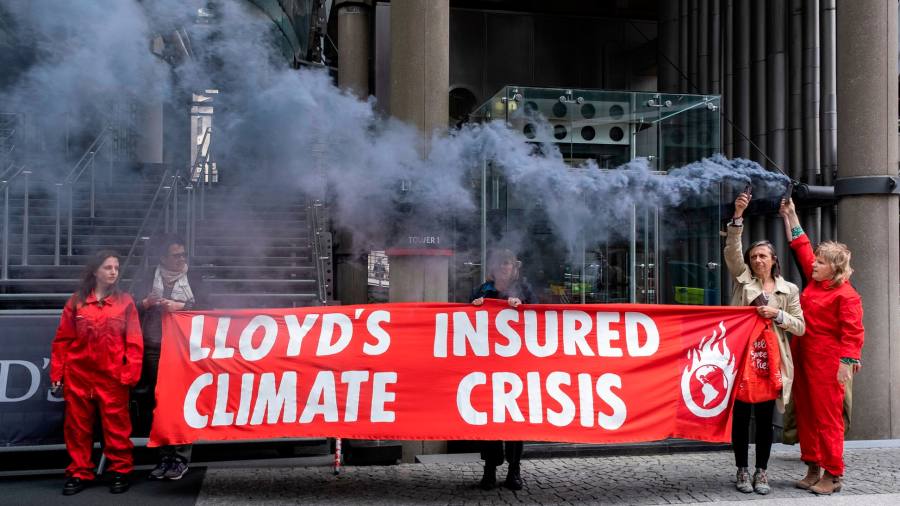
The European insurance industry has faced criticism from a campaign group based in New York, which demanded the sector pull out of the United Nations designed Net-Zero Insurance Alliance. Furthermore, Washington-based pressure group, the Consumers’ Research retained that the alliance, which is committed to cutting carbon footprints, threatened free competition. After a letter was sent this month from US attorneys-general to the insurance group raising "serious concerns", several large firms withdrew from the group, undermining the wider pledge from the finance and insurance sectors to reduce carbon emissions.
The relationship between Germany and Poland is crucial for the success of the transatlantic community in meeting challenges like China and Russia, but their political divisions are deep and serious. This creates a conundrum for the US, as Berlin and Washington seem content to wait for the Polish parliamentary elections due to take place this autumn, in the hope that the current conservative government will be ousted. However, this may not happen and even if it does, swapping governments is unlikely to resolve the fundamental issues at the root of the disagreement. A potential solution for the US, Germany and Poland is to focus on Ukraine, an issue where their interests align. To avoid losing the peace, the transatlantic community must address key issues regarding Ukraine’s future, including NATO and EU membership, security assistance and reconstruction to ensure Ukraine is not an aid-dependent basket case. Security assistance should be a NATO-led project, whilst reconstruction should be led by the G7 plus, including Poland. The private sector could also play a key role in Ukraine’s reconstruction through initiatives like the Three Seas Initiative to connect Ukraine to the rest of Europe.
The Canadian city of Vancouver has approved the addition of the honorary name “Komagata Place” to the iconic Canada Place waterfront area. The designation recognises historic discrimination against the South Asian community following the arrival of the Komagata Maru boat in 1914. The vessel carried 12 Hindus, 27 Muslims and 340 Sikhs, the majority of whom were denied entry, despite possessing correct travel documents. The decision by city authorities is described as a “meaningful step” in increasing inclusiveness, and will be accompanied by the unveiling of a new road sign and plans to upgrade the Komagata Maru Monument.
Cities with half-empty office buildings are considering what kind of office product will thrive and how to repurpose buildings that aren't viable for the future. Conor Sen, writing for Bloomberg, has predicted that the offices of the future will emulate the experiences offered by IMAX movie theatres, with top-quality design, shopping, cultural experiences and plenty of green space. Sen believes landlords with the wealth and tech tenants to make it work could establish "lifestyle offices," with high-end amenities to draw tenants and command high rents. Those without this luxury should focus on improving amenities for existing buildings, or consider repurposing for residential use.
Short-term rental platforms like Airbnb and Booking.com are causing a drain on Toronto's rental housing market, as more rental units are being taken off the market than added to it. According to Toronto's Housing Data Book, the Canadian city added 15,000 new rental units in 2022, half the number added in 2015, while Airbnb alone now has 16,000 available units in the city. The trend could have serious implications for renting long term, increasing the cost of renting and removing affordable housing from the market.
As the Toronto mayoral elections approach on June 26, the results are still uncertain, with incumbent Olivia Chow out in front but no candidates polling for second place. With more than 101 candidates running for mayor, endorsed by a range of campaign groups, it’s difficult to second guess what will happen as the only certainty is that problems within the Toronto area need to be tackled: high real estate prices, homelessness, budgetary problems, traffic, and transit. Voters will also be aware that the new mayor will have unprecedented powers. This year is unique because it’s the first time that the new mayor will be granted extensive powers of control a.k.a. “strong mayor” powers of veto by rejecting council decisions or passing bylaws with a minority of councillors’ support. To help sway any undecided voters, this Wednesday will see a debate between six of the leading candidates on subjects that identified as being of concern to voters in Toronto.