More than 350 AI experts, including researchers and executives from firms such as Google, DeepMind, Microsoft and Anthropic, as well as the Turing award-winning academics Geoffrey Hinton and Yoshua Bengio, have signed an open letter calling for action against the potential threat of AI to humans. The letter, published by the Center for AI Safety (CAIS), said "mitigating the risk of extinction from AI should be a global priority alongside other societal-scale risks such as pandemics and nuclear war". The group sees regulating AI as "as much of an ethical issue as a technical one".
UK Labour leader Sir Keir Starmer has stated that his party will not seek to rejoin the EU if it returns to power, saying that “Britain’s future is outside the EU”. However, he also said that he agreed with pro-Leave voters who wanted an improved health service, better jobs and higher wages. Starmer argued that Brexit could still be a success with “hard work, good relations and above all, honesty”. In a recent YouGov poll, a record number of Leave voters said that Brexit had been a failure.
Yupharet Eakturapakal, founder and CEO of G-Yu Creative, has argued that Japan’s entertainment industry should put more effort into developing the overseas market. Eakturapakal highlights that many J-pop artists do not perform in Thailand, despite Thai audiences enjoying the genre, suggesting that Japan’s domestic market is very strong and that artists may not perceive foreign markets to be lucrative.
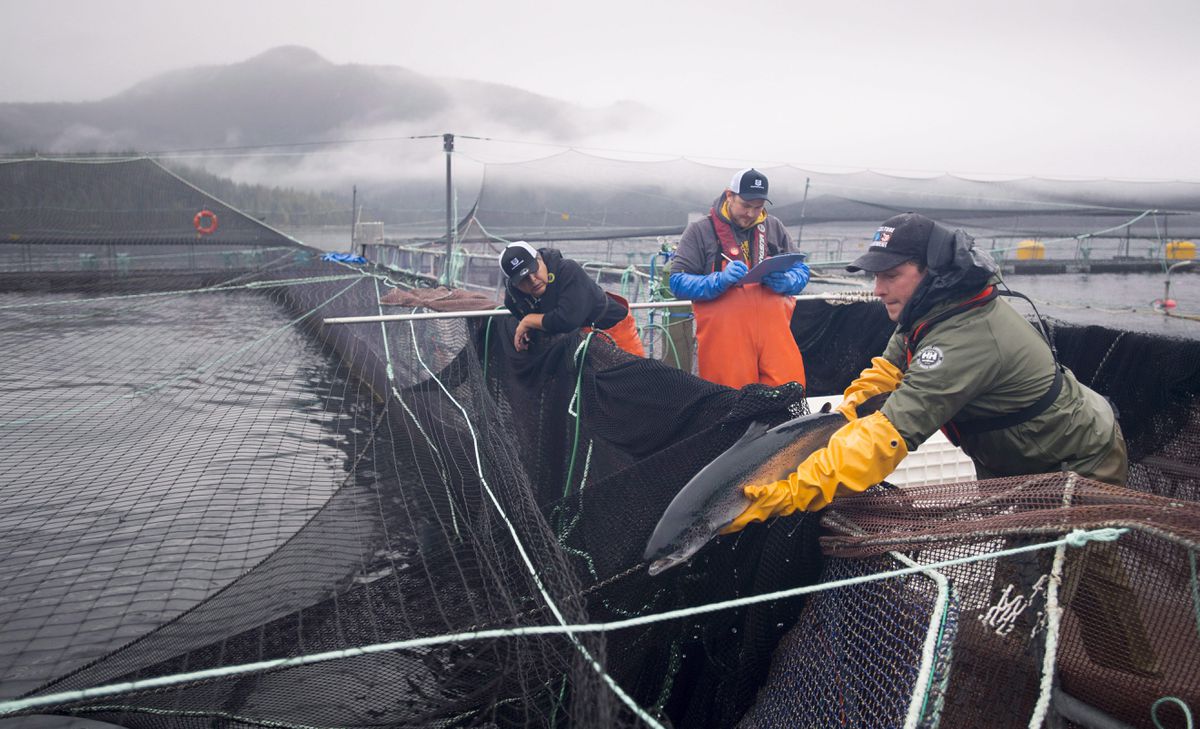
Canada's Fisheries Minister Joyce Murray has delayed a decision on whether to close the remaining ocean-based salmon farms in British Columbia after pressure from First Nations and industry groups. The minister's mandate letter sets out a plan to move open-net fish farms out of B.C’s coastal waters to land-based businesses. This delay follows Ottawa meetings between fish farm representatives and senior staff. Concerns have been raised that closing fish farms could jeopardise jobs and the welfare of wildlife such as killer whales, eagles and grizzly bears who depend on salmon as food.
Last week, the G7 summit turned out to be one of the most significant summits in the group’s history as the US, Japan, Europe and their allies made clear that they intended to join forces to counter China. Moreover, Japan, which hosts this year’s summit, invited key leaders from the global south, not least India’s prime minister Narendra Modi, in reaching out to rising and middle powers. The G7 wants to persuade others to join its more muscular response to China’s rise. Thus, even if India does not become a formal ally, it will continue to position itself as an independent rising power whose interests are more aligned with the West than with China and its allies.
Chinese intelligence agencies and corporations are heavily involved in the acquisition of open-source intelligence to gain knowledge of US military capabilities, according to a report from security firm Recorded Future. Companies throughout China are gathering publicly available data on US defence, gathered from thinktanks, private firms and the Department of Defense. The data could help Beijing prepare for a potential conflict with the US by analysing military doctrine, planning and capabilities. China’s investment in big data management could give it an advantage over the US.
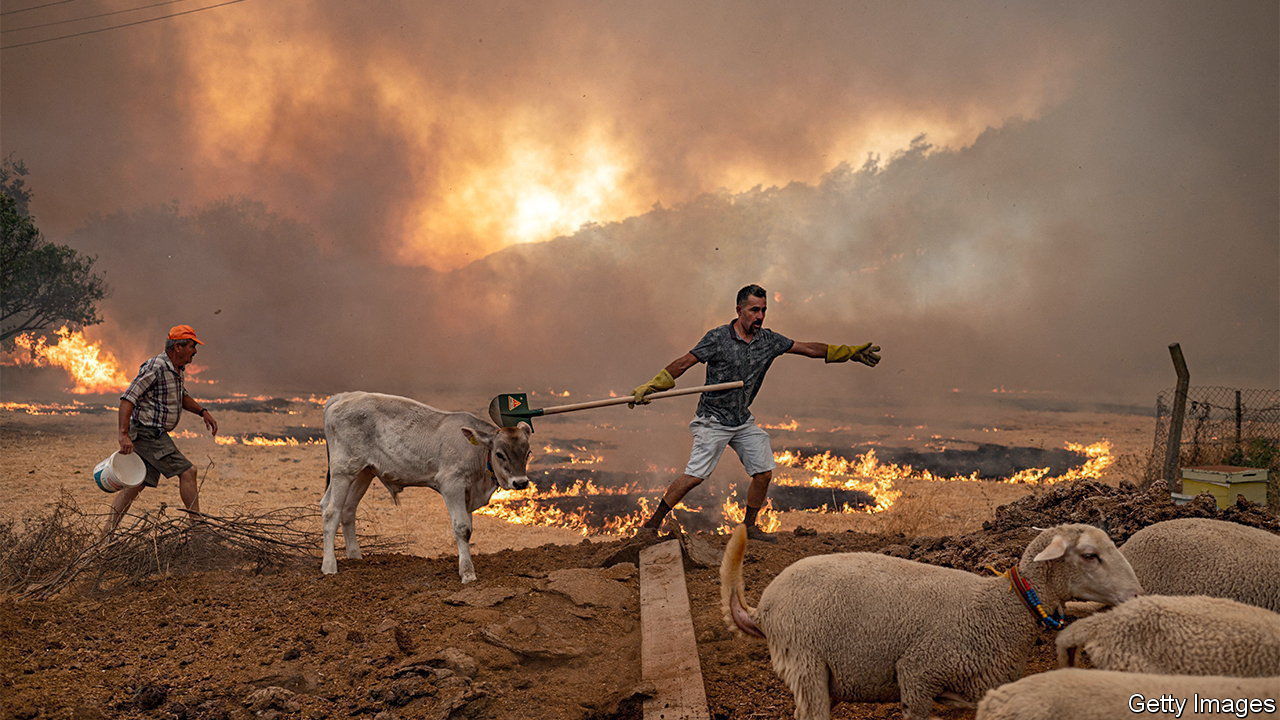
The Mediterranean and Middle East region can expect to see days where the temperature rises above 50°C become once-in-a-decade events by 2100, according to research by scientists including climatologist Nikolaos Christidis at the Hadley Centre. The team have calculated that carbon dioxide levels reaching 600 parts per million by 2100 will make such temperatures highly likely, resulting in more droughts, fires, extreme heat and deaths. The Hadley Centre is a part of the UK’s Met Office.
Education officials in Scotland's Borders region have held a careers fair that gave students hands-on opportunities to discover the jobs of the future. The event, which gave S2 students hands-on augmented reality experience, as well as the chance to study space engineering and work with green-energy vehicles.
A group of Labour politicians, including former Prime Minister Gordon Brown, is campaigning for reform of the UK through the Alliance for Radical Democratic Change. The group intends to launch wide-ranging proposals including the abolition of the House of Lords and greater devolution to regions in the UK, and will call on politicians from all regions and political parties to support their objectives. Brown published a report recommending these reforms earlier this year. The launch comes amid calls for Scottish independence over discontent at the UK's exit from the EU.
The Royal Navy is developing drone launch capability on its aircraft carriers as part of its "future maritime vision". Rather than relying on the ramp for jet take-offs, the Navy is looking at aeroplane launch and recovery systems that would enable a wider range of aircraft and drones. 2016 saw the launch of HMS Queen Elizabeth, fitted for F-35s, but a Navy spokesperson said the "challenge is to get an aeroplane in the sky". He added that in the future "drones will move heavy items and that's what we are moving towards". The Navy aims to move from short take-off and landing to catapult take-off with arrested recovery, and is extending the ramp to enable drone launches. The goal is to use drone technology to move heavy items on board. Colonel Phil Kelly, head of carrier strike and maritime aviation, said the retrofit equipment would help accommodate a variety of aircraft and drones.
As Congress focuses on the budget for the 2024 fiscal year, it should introduce "carbon scoring" alongside financial assessments. The same non-partisan, independent, and accountable approach taken by the Congressional Budget Office should be applied to indicate a bill’s carbon emissions impacts, so that policymakers can assess and consider the long-term policy impact of tackling the issue of climate change. With the absence of a federal entity tasked with this activity, researchers at Resources for the Future and the Brookings Institution are developing the foundations for assessing the carbon impact of legislation via a new Office of Carbon Scoring.
Hong Kong businessman and former Executive Council convenor Bernard Chan has argued that parents, the community and business leaders need to instil the qualities of courage, commitment, passion and integrity into younger generations in order to equip them to address the major issues afflicting society today. Chan contended that dialogue and engagement with other communities were key to establishing respect, understanding and tolerance for different cultural values, and advocated for a focus on improving diplomatic relations through collaboration as a means of overcoming challenges facing humanity.
Fifty percent of all employees will need reskilling by 2025 as automation is transforming the workplace, according to the World Economic Forum's The Future of Jobs Report 2020. Data analysts and scientists, AI and machine-learning specialists, and business development professionals with AI skills have been identified as the top emerging job roles between 2020-2025. With data analysis and interpretation as the key skills in demand, while AI and automation will steal jobs that focus on tasks like data entry, billing and customer service, humans will remain irreplaceable in areas such as creativity, critical thinking and relationships.
The report suggests that reskilling is essential for future career success, with competence in areas such as understanding AI basics, developing data literacy, expanding emotional intelligence, enhancing critical thinking and embracing lifelong learning. Employing critical thinking alongside emotional intelligence will allow humans to question assumptions and biases, identify multiple perspectives and make informed, logical decisions. This will enable them to assess how AI-generated information and outcomes might affect themselves and others. Continuing to stay informed about AI developments will also be useful in the field, requiring engagement in courses, online learning and research.
AI and automation should ultimately free up humans to focus on more complex issues, so developing an understanding of automation, data analytics and AI will position individuals as innovative experts. This can, in turn, establish trust with clients, customers and colleagues. As AI evolves, it is crucial for individuals to build their competencies in the areas of data literacy, emotional intelligence, and critical thinking to ensure career success.
The war in Ukraine could be impacted by political shifts in Belarus and Iran, the failure of Russia's military operation, and a deteriorating relationship between the US and China. If Belarus or Iran face political turmoil, Putin's support will wane, as will his support if his military operation in Ukraine fails to have an impact. Additionally, if the US and China find a way to remedy their differences, Russia is likely to be given less attention, causing Putin concern.
French President Emmanuel Macron struck a conciliatory tone in his speech at a security conference in Bratislava this week, promising Europe’s eastern nations that they could “count on” France in the future. The carefully chosen words follow years of tension between France and its eastern counterparts, with Macron seeking to reassure the regions ahead of several crucial decisions relating to the next phase of Ukraine’s conflict as well as the issues of EU enlargement and the future of NATO.
Britain's future defence strategy may become detrimental to its interests as the government may further reduce numbers of Army personnel instead of reversing previous cuts, argues journalist and former British Army member Robert Clark. In addition to this, the UK could at least temporarily lose the capability to deploy an armoured war-fighting division with the cuts. Clark's article comes ahead of the Ministry of Defence's publication of its much-anticipated refresh of the defence command paper after the current version proving "strategically incoherent".
General Motors (GM) and South Korea's POSCO Future M are to invest further funds in a battery materials facility in Canada. Their battery factory in Quebec is expected to produce cathode active material (CAM) for electric vehicle batteries. The two firms, which established a joint battery venture called Ultium CAM last year, will now expand the plant with new investments in mineral processing. Their additional investment means the companies' total expenditure on the Canadian site is now worth more than $1bn. News of the purchase came hot on the heels of a cash injection of CAD150m ($112m) from the Canadian federal government and Quebec province.
Artificial intelligence (AI) is being used in ETFs to make better-informed decisions for investors, but its impact on the market varies. The WIZ Bull-Rider Bear-Fighter Index, which uses AI to pick which ETFs to invest in, saw a slump in the markets following the response to Covid-19, causing erratic signals and confusion. As a result, WIZ has lost $200 million of its $250m assets-under-management values, falling 7% since its inception in October 2019, compared to a rise of 37% in the S&P 500 over the same period. Despite this, proponents believe that AI’s ability to weed out any irrelevant data points in the equity market could help to pick out valuable signals that identify investment opportunities in particular sectors, although some remain skeptical as to whether AI could return greater profits than humans. Meanwhile, an alternative use of AI in the finance sector has come through robo-advisers. Providing individual and personalised advice on investments and financial strategies to individuals who would otherwise need to rely on wealth managers or expensive accountants and brokers. For example, PortfolioPilot uses AI to read copy and paste investment statements and to help guide investors’ next steps. Other firms are offering advice to thousands of investors with billions of dollars of equity with AI built in. The development of this type of AI brings unprecedented change to everyday investors.
Former premier of Western Australia, Carmen Lawrence, has called for the state's cultural and sports institutions to distance themselves from fossil fuel funding. Lawrence specifically highlighted Chevron and Woodside as companies with significant influence over state decision making. The organisations have made frequent provides of small amounts of funding for cultural events and sports teams in the region, presenting an opportunity for clean businesses to step in and replace fossil fuel funding. A code developed by Australian independent research organisation the Climate Council offers a roadmap to break free from these funding ties.
An anti-woke group of US state attorneys general has warned major insurers that signed up to the Net-Zero Insurance Alliance that climate policies meant their costs, and the costs of the insured, would climb. Critical of the alliance's net-zero goals, the letter warned of possible antitrust action. It appears to have worked. The alliance lost almost 50% of its members in recent weeks, including AXA, Tokyo Marine, Munich Re, Lloyd's of London, SOMPO and Spain’s Mapfre, but the insurers will not change their orientation towards net-zero goals as their very existence depends on assessing climate risks, present and future.